It turns out you aren’t alone in being hesitant about making any moves. The California housing market in 2026 has people in a similar dilemma: Is it finally the right time to do something, or should they continue waiting?
These concerns are understandable. Mortgage interest rates haven’t been following a single trend going down but instead have been fluctuating. Prices in California have been setting new records while remaining unaffordable at the same time. In the Westside, starting from Pacific Palisades and ending in Brentwood and Venice, there are additional local factors such as rebuilding from wildfires and the luxury transfer tax in Los Angeles.
There cannot be one-size-fits-all advice that would work in all cases. There are certain facts, however, that can give you an idea of how the California real estate market in 2026 looks and help you find the right course of action. We present these facts below and explain what each of them means in terms of making decisions regarding buying or selling property.
This guide is designed for the individuals who must make those choices: first-time buyers looking to get into the California real estate market of 2026, homeowners contemplating listing their property, up-and-comers ready for that new house, families making that cross-state move to California, and real estate investors looking for that next investment. Whatever your reason for looking at California home prices, the trends below apply specifically to your situation.
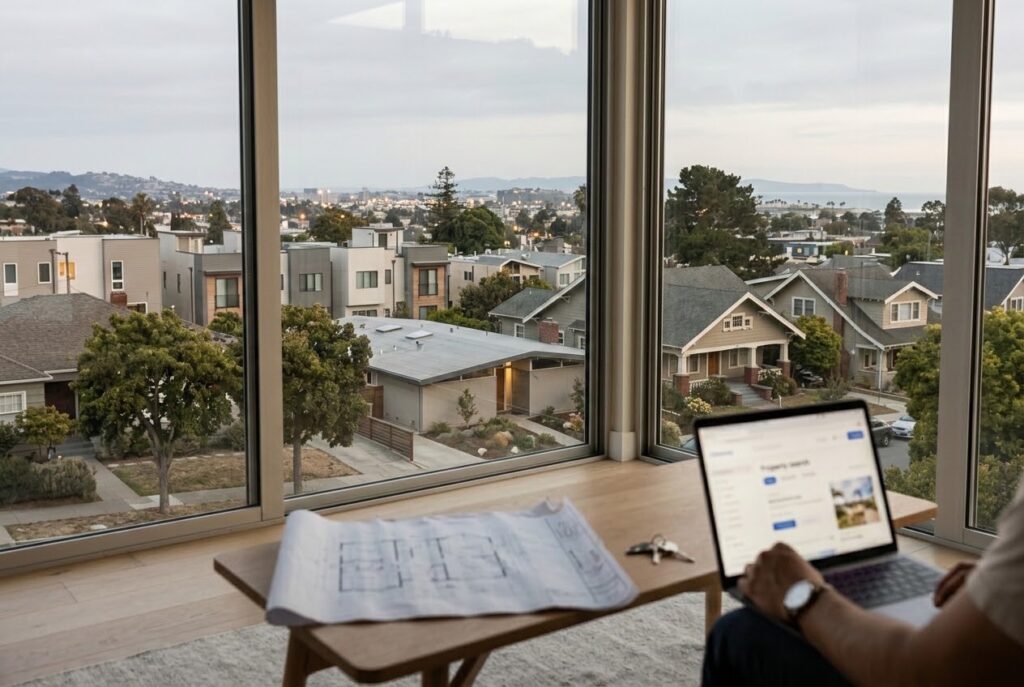
The Big Question: Buy, Sell, or Stay Put in 2026?
The annual inquiry is never far away, and every year the reality of the answer is always the same. It all depends on your objectives, the time frame, and the money, not just what you read about in the media. The unique aspect about the California real estate market for 2026 is that it is truly a mixed market. There is no rush to sell by sellers as there was in 2021, and there is no buyer reluctance as was evident in 2023.
7 California Real Estate Market Trends to Watch in 2026
1. Mortgage Rates Are Easing, But Unevenly
One of the most significant swing factors impacting the California housing market in 2026 will continue to be mortgage rates that California buyers are watching. According to the California Association of REALTORS®, the average 30-year fixed was supposed to move towards around 6% this year, with the reduction in inflation. In reality, mortgage rates California buyers are watching have held stubbornly in the 6%-plus range all summer long, increasing periodically when oil prices and Treasuries moved in response to international developments. Freddie Mac reported its weekly average at 6.5-6.7% over the last month, which speaks volumes about how volatile a week-to-week environment buyers in the California real estate market in 2026 have to consider.
Bottom line: while the rate environment is more favorable than 7%+ level of previous years, the rates do not decline in any linear fashion, which is why buyers need to get pre-approved ahead of time, discuss options such as rate lock and buy downs with the lender, and check their numbers every month, instead of waiting for the “perfect” rates that don’t come on time. The seller needs to understand this as well because the buyer’s ability to purchase changes significantly from week to week.
2. Home Prices Are Hitting New Highs, But the Growth Pace Is Cooling
Home prices in California in 2026 have already hit new records, with the median price statewide hitting $914,800 during the spring period, with annual predictions indicating median prices at around $905,000, a rise of approximately 3.6% in relation to the previous year. This is definitely real appreciation, although not anywhere close to what has been seen before. In the California real estate market in 2026, this is indeed good for everyone, with sellers gaining value while buyers are not chasing a market that has left them in the dust every single month.
3. Housing Inventory Is Improving, Slowly
The most critical challenge that has been facing the California market for many years has been housing inventory, and the outlook for 2026 is expected to show modest improvement. The total number of active listings in the state exceeded 103,000 in early 2026, and the Unsold Inventory Index has steadily risen after the incredibly tight inventory seen in 2023 and 2024. Predictions are for active listings to rise yet further, with some forecasts indicating 10 percent more homes available for sale in 2026 as rate-locked homeowners put their homes on the market.
However, in the popular submarkets of the coast and Westside of California, the real estate market in 2026 is very competitive indeed when it comes to finding good value, move-in ready properties, despite the easing in supply elsewhere in the state. It makes a difference, too, for those searching for homes: buyers looking in popular areas can expect competition in their search, but those willing to be more flexible about where they look will find plenty of room to breathe in the broader California housing market in 2026.
4. California’s Insurance Crisis Is Now a Core Part of Every Deal
Any discussion on the housing market in California in 2026 has to include the issue of insurance. The increase in insurance rates, non-renewal, and increased use of the FAIR Plan have made insured property a key factor in the deal, particularly in regions that are prone to fires. The buyers have been asking whether the insurance will be available before even considering square footage. If you want a deeper dive, we cover this in detail in our guide on https://jakelesliehomes.com/california-home-insurance-challenges-guide/
5. Wildfire Recovery Is Reshaping the Westside Real Estate Map
When it comes to the nearby region, the factor that has played an instrumental role in affecting the California real estate market in 2026 has been the rehabilitation effort that is currently being undertaken in Pacific Palisades and other canyons. The number of sales has increased when compared to previous year numbers although the cost has come down significantly. At the same time, the houses are also taking longer to sell. This situation has made things easier for buyers who are ready to analyze the rebuilding potential, value of the plot, and insurance prospects.
6. Affordability Remains the Defining Challenge
Regardless of all the positives, the question of affordability remains the elephant in the room for the California housing market of 2026. Currently, only about 18% of Californian families can afford the price of the median house in the state, a good increase from the previous year but still an extremely low percentage. Thus, more trade-up buyers will have to settle for cheaper starter homes, more first-time buyers will choose to buy townhouses, and more existing homeowners will choose not to trade their low mortgage rate for a high one.
7. Measure ULA and Luxury Market Shifts Are Changing Seller Strategy
The impact of the Los Angeles Measure ULA Transfer Tax, which applies to homebuyers of high-value Westside properties, such as those in Beverly Hills, Brentwood, and Santa Monica, is now being subtly felt in terms of decision-making. Starting July 1, 2026, this tax will be implemented at 4% for transactions priced between $5.4 million and $10.9 million, and 5.5% beyond that in the City of Los Angeles. In place of selling, more wealthy homeowners are opting to remodel their homes, seeing the rise in high-quality remodeling permits after the tax came into play.
California Housing Market 2026 at a Glance
| Metric | 2026 Snapshot |
| Statewide median home price | ~$905,000–$915,000 (record high) |
| Median price growth | About +3.6% year over year |
| Average 30-year mortgage rate | Mid-6% range |
| Housing affordability | ~18% of households can afford the median home |
| Active listings statewide | 100,000+ and rising |
| Existing home sales (forecast) | ~274,400 units, up ~2% |
Should You Buy, Sell, or Stay Put in California in 2026?
Here’s where the seven trends above translate into a real decision. Is 2026 a good time to buy a house in California? Should you sell your California home this year, or is holding steady the smarter play? The honest answer depends on where you fall in the table below.
| Your Situation | What the California Housing Market 2026 Suggests |
| First-time buyer with stable income and pre-approval | Buy. Rising inventory and cooling price growth mean less competition than in past years. |
| Homeowner in a highly desirable neighborhood, move-in-ready | Sell. Buyer demand is strong for turnkey homes, and equity gains remain healthy. |
| Owner with a mortgage rate well below today’s rates | Stay put (or explore renting it out) unless a life event forces a move. |
| Move-up buyer needing more space | Buy strategically. Longer days-on-market in some areas means more room to negotiate. |
| Seller near a Measure ULA or high-tax threshold | Sell carefully. Get a pricing strategy that accounts for thresholds and timing. |
Regardless of which line best fits you, the California real estate market 2026 benefits from a strategy that takes into account the numbers you have, rather than speculating on where interest rates and prices will be six months down the road. It’s precisely for this reason that partnering with a Realtor who follows these trends daily, rather than once, proves to make all the difference.
Home Buying and Selling Tips for California in 2026
- Buyers: Make sure to get preapproved for a mortgage as soon as possible so you will be ready to act fast when the right house comes on the market.
- Sellers: Price according to the current market, not last year’s data, and have all your disclosures and insurance paperwork ready before listing.
- Current homeowners: Think about doing a cash-out refinance or improvement mortgage rather than selling if you are paying significantly lower interest rates compared to the current average.
- Investors: Focus on recovering areas with future growth potential over currently depressed areas with uncertain prospects.
FAQs About the California Housing Market 2026
Is 2026 a good time to buy a house in California? For many buyers, yes. Increased supply and reduced price increases make for fewer bidding wars than in previous years, but high-interest mortgages and high insurance rates call for careful budget planning.
Should I sell my California home in 2026? With your house in great condition and ready to move into, it is definitely a good year to sell because there is high demand for houses currently and because you will have made some gains in equity.
What will happen to the California housing market in 2026? The predictions for housing suggest a modest growth rate and not necessarily an increase or decrease in housing. There will be increased sales and a record-high median price.
Are California home prices going to drop in 2026? Analysts generally do not expect an economic downturn. This current period of slowing is due to the market adjusting to a level following the rise during the pandemic era.
Is it smarter to stay put instead of buying or selling right now? For homeowners with a mortgage rate well below today’s average, staying put and possibly renovating is often the more financially sound choice unless a job change, family needs, or lifestyle goal requires a move.
Final Thoughts on the California Housing Market 2026
California housing market 2026 cannot be summed up in one headline. The California housing market 2026 is characterized by seven trends happening simultaneously: moderating but unstable interest rates, all-time high yet stable prices, increasing inventory levels, a changing insurance market, a recovering Westside, continued unaffordability, and the luxury sector adapting to the tax changes. Being either a buyer, seller, or homeowner in such conditions isn’t a matter of luck. It’s a strategy that you need to develop based on your goals and neighborhood specifics.
Not sure whether to buy, sell, or stay put in 2026? Receive customized assistance tailored to meet your objectives and current market trends in California. Connect with Jake Leslie now for professional real estate insights.
📞 Call or text: 310-383-0911 📧 Email: 1100loftinc@gmail.com
Follow Jake Leslie Homes
Stay up to date on the latest listings, market trends, and neighborhood spotlights across Venice, Santa Monica, Beverly Hills, Brentwood, and Pacific Palisades: